
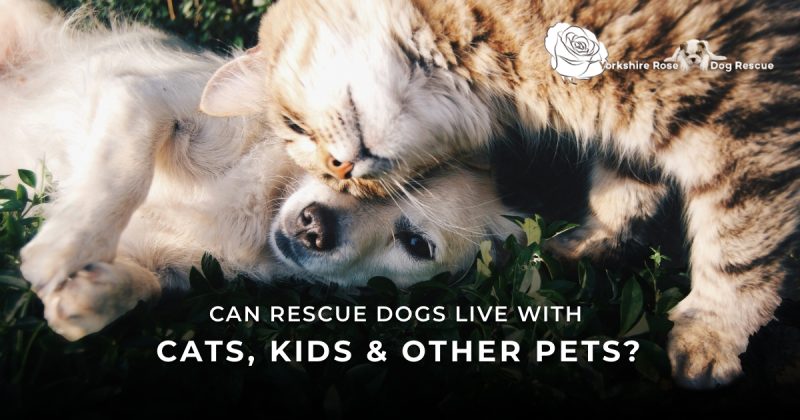
One of the most common questions we are asked at Yorkshire Rose Dog Rescue is whether rescue dogs can live happily alongside cats, children, or other pets. The short answer is: yes, many can! However, just like people, every dog is an individual, and their ability to adapt to different family members — whether furry or human — depends on their personality, background, and the introductions made in their new home.
In this article, we’ll explore what you need to know if you’re thinking about adding a rescue dog to your family alongside cats, children, or other pets.
1. Rescue Dogs and Cats: Can They Get Along?
It’s absolutely possible for rescue dogs to live harmoniously with cats, but it often depends on a few key factors:
- Past Experience: Some dogs have lived with cats before and understand how to behave around them. Others may never have encountered a cat and could be too curious or excitable.
- Prey Drive: Some dogs, particularly certain breeds, have a strong instinct to chase smaller animals. This doesn’t automatically rule out a home with cats, but it does mean careful introductions and management are essential.
- Gentle Introductions: Introducing a dog to a cat should be done slowly and carefully. Allow them to smell each other through a barrier first and never force direct contact. Positive, calm experiences are key.
- Supervision: Always supervise interactions, especially in the early days. Giving both the dog and the cat their own safe spaces where they can retreat is important to help them feel secure.
At Yorkshire Rose Dog Rescue, we assess each dog’s behaviour as much as we can and will advise if a particular dog would be better suited to a cat-free home.
2. Rescue Dogs and Children: Building Safe Friendships
Many rescue dogs thrive in family homes with children, but it’s important to remember that successful relationships between dogs and children are built on mutual respect and supervision.
- Temperament Matters: Some dogs are naturally gentle and patient, making them great companions for children. Others may be more nervous or unsure and prefer quieter households.
- Understanding Dog Body Language: Teaching children how to behave around dogs is vital. They should know not to approach a dog that is eating or sleeping, and to always be gentle.
- Respect for Space: Dogs, particularly those that have had a difficult past, might be sensitive to noise or rough handling. Children should learn to give the dog space when needed.
- Supervised Interaction: Always supervise young children when they are around the dog, especially during the first few weeks when the dog is settling in.
We always match our dogs carefully to the right homes and will tell prospective adopters if a dog would be happy living with children, or if a quieter, adult-only home would be more appropriate.
3. Rescue Dogs and Other Dogs: Finding Canine Companions
Rescue dogs often love the company of other dogs — after all, dogs are naturally social animals. However, just like people, not every dog gets along with every other dog.
- Previous Socialisation: Dogs that have lived with other dogs before are often more confident and sociable. Some, however, may have had negative experiences and may prefer to be the only dog.
- Personality Matches: Matching the personalities of dogs is important. A shy, gentle dog may not appreciate the company of a boisterous playmate, for example.
- Gradual Introductions: Introducing a new dog to your resident dog should be done slowly, ideally on neutral ground like a park, with both dogs on leads. Let them get to know each other without pressure.
- Monitoring: Even if dogs get along initially, it’s important to monitor their interactions during the settling-in period to ensure that no conflicts arise over toys, food, or attention.
At Yorkshire Rose Dog Rescue, we often arrange meet-and-greets between potential dog companions to ensure they are compatible before adoption takes place.
4. Setting Up for Success
Whatever your household looks like, bringing a rescue dog into the mix requires time, patience, and careful planning:
- Take it Slowly: Don’t rush introductions between your new dog and other pets or family members. Give everyone time to adjust.
- Set Clear Boundaries: Consistent routines, clear rules, and positive reinforcement help your new dog understand what’s expected.
- Provide Safe Spaces: Ensure that all pets have areas where they can retreat and relax without disturbance. This helps reduce stress and prevent problems.
- Be Patient: Adjustment takes time. Some dogs settle quickly, while others may need weeks or even months to fully relax and feel part of the family.
Many rescue dogs make fantastic companions for families with children, cats, or other dogs. It all comes down to matching the right dog to the right home and giving everyone time and support to build those new relationships.
At Yorkshire Rose Dog Rescue, we take the time to get to know each of our dogs and help guide adopters towards the best match for their lifestyle. If you have other pets or children and are thinking of adopting, we’ll work with you to find a dog that will fit right into your home — and your heart.


